|
|
|
|
|
Newsletter Sign-up |
|
|
| |
Receive
information on our special
offers, along with the latest products, tips and articles
|
|
|
|
|
|
|
 |
|
When recommending speed humps
we look at the volume, speed and type
of traffic going over the speed hump. The surface the speed
humps are being attached to and whether or not the speed
humps are
temporary, permanent, semi-permanent or even portable.
Each design offers slightly different benefits.
We aim to help you choose the right speed hump to meet your
needs.
|
 |
Australian Standards:
Guidelines for speed humps are
set down by Australian standard AS2890.1, and sets the benchmark for our
industry. We've tried to summarise some of the key points of the standard
below.
-
Type 2 speed humps are
appropriate for use in car parks where it is desired to further check the speed
of vehicles mostly travelling at 30km/h or less.
-
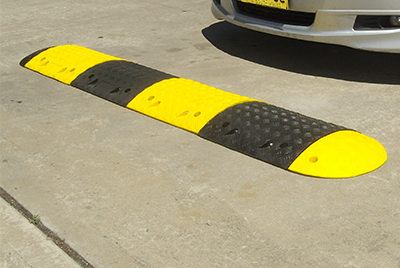
Speed hump markings shall feature
white or yellow stripes at 25cm intervals
-
The height of speed humps shall
be between 25mm and 75mm high
-
Speed
bumps should not be spaced
closer than 10metres along any aisle or roadway
-
Maximum spacing of speed humps
(where required to control speeds continuously along a roadway) should be about
50metres.
-
Speed humps should be located
clear of intersections and curved roadways.
|
| |
|
Call Premier Workplace Solutions
on 1300 76 44 77 for assistance and up to date pricing.
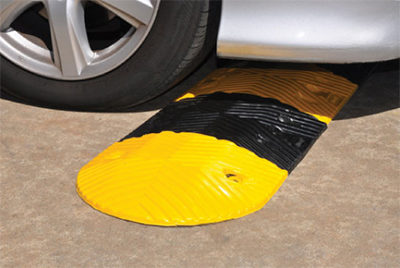
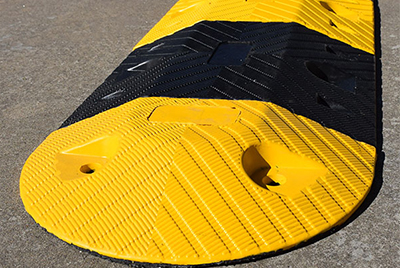
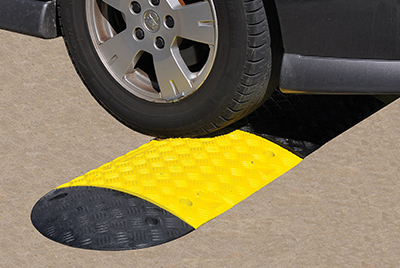
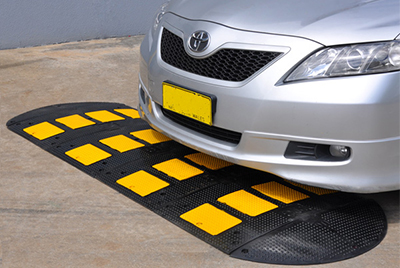
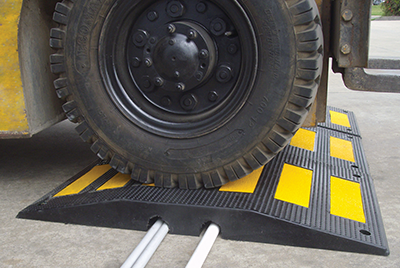
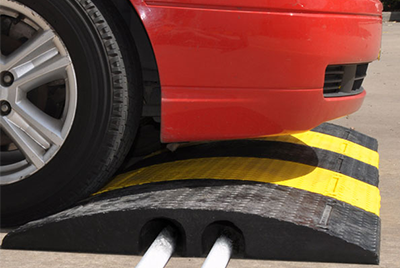
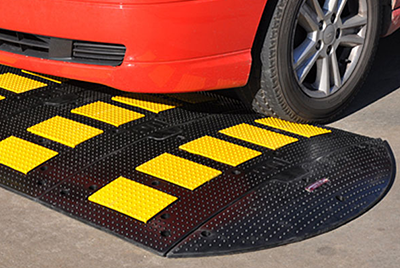
PWS provide a range of speed humps
and speed bumps. These include temporary speed humps, a
portable speed hump and a variety of standard speed humps and
heavy duty speed humps, all at competitive prices. |
|
 |
|
|
|
|